







(+48) 228824488 [email protected]

Special black offset inks for sheetfed presses

Compare black offset inks for solid density, setting and resistance during finishing. A deep black does not confirm readiness for cutting. Match the series to the substrate and production conditions.

How to choose special black inks?

First, determine the paper, printing method and further processing. The intensity of black alone does not determine whether the ink suits the job.

Ink When should you consider it? Differences and limitations
Novagloss 195 RT You need fast fixing and bookbinding. Substrate penetration and oxidative drying. Check readiness for processing on your paper.
777 DEEP SPACE You are printing invert and want to achieve a bluish, intense black. Fresh ink. Before lamination or painting, confirm the required resistances.
Offset Black 110 You print on uncoated paper and compare the cost of ink. Drying by soaking. Take longer drying time into account; choose a different series for a coated substrate.
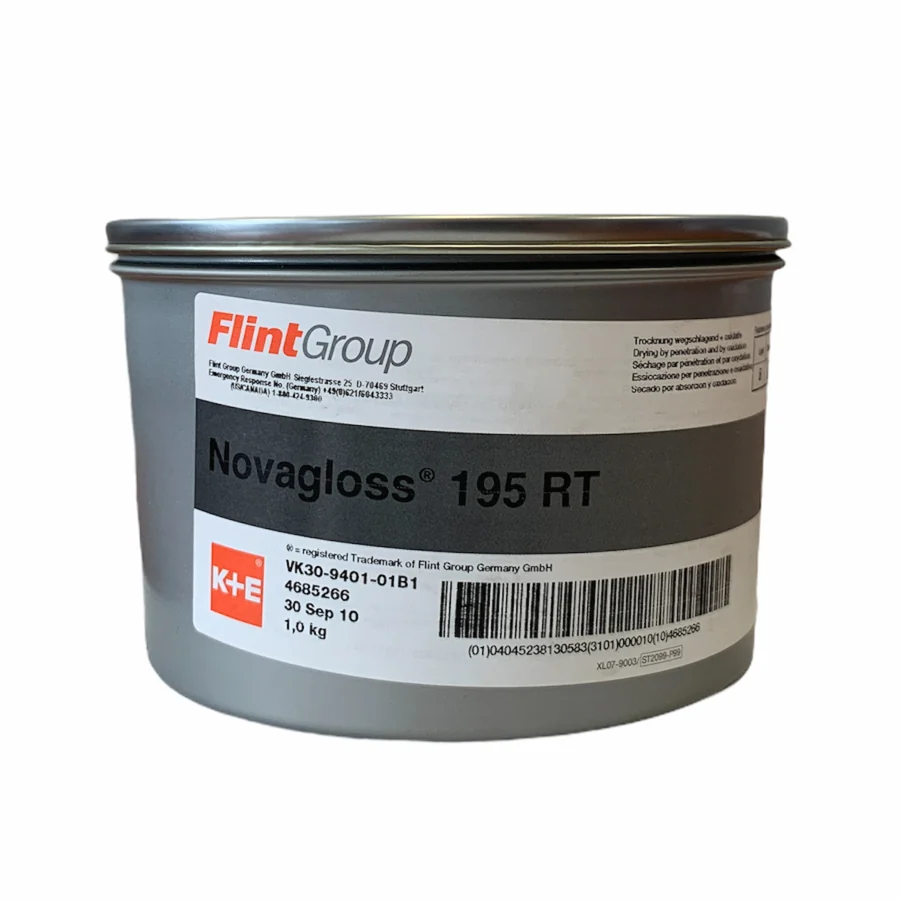
A can of Novagloss 195 RT black ink

Fast setting and intense black

Novagloss® 195 RT

Choose this series when you want to quickly transition to bookbinding. Increased pigment concentration ensures intense color. The ink combines substrate penetration with accelerated oxidative drying.

What do you get?

  • Fast setting – thanks to rapid absorption and oxidative drying.
  • Intense black – thanks to increased pigment concentration.
  • High abrasion resistance – also on matte coated papers.

What should you look out for?

Do not assume one drying time for all jobs. Before further processing, check the fixation of the ink on specific paper and at the applied layer thickness.

Application and properties

Technology Conventional sheetfed offset
Fixation Substrate penetration and fast oxidative drying
Main feature Increased pigment concentration
Further processing Work requiring quick bookbinding

Reversal printing and bluish black

Novastar® 777 DEEP SPACE

Achieve intense blacks with double-sided reversal printing. The “fresh” series combines increased pigment concentration with quick absorption. It will work well for 1+1 works printed in one pass.

What do you get?

  • Very good coverage and contrast – with high pigment concentration.
  • A bluish shade of black – high gloss.
  • Good abrasion resistance – while maintaining rapid absorption.

What should you look out for?

The collective data sheet does not confirm the resistance of this series to alcohol and solvent mixtures. Before lamination or varnishing, agree on the choice of ink and test the entire set of materials.

Application and properties

Technology Conventional sheetfed offset; S+W printing (with perfecting)
Ink type “Fresh”
Tint Black, tinted towards blue
Resistance For alkali; no confirmed resistance to alcohol and solvent mixtures
Refinement Ink selection and material compatibility require confirmation prior to production

Economical black for uncoated substrates

Novavit® Offset Black 110

Choose an economical solution for printing on uncoated paper. Offset Black 110 stays fresh in the ink duct and dries by soaking. You can use it in multi-color machines, also when printing with perfecting.

What do you get?

  • Economical use – for working on uncoated substrates.
  • Freshness in the ink duct – with a soak-drying mechanism.
  • Flexibility of use – in multi-color machines and reversal printing.

What should you look out for?

Take into account longer drying time than standard offset inks. Don’t treat it as a universal black for every surface. Because it dries by soaking in, choose it primarily for uncoated paper. For a coated substrate, discuss the selection of a different series.

Application and properties

Technology Conventional sheetfed offset
Substrate Primarily uncoated
Drying mechanism Seepage
Inkpot behavior Stays fresh
Application Multi-color machines, also printing with perfecting

Selection questions and practical limits

When should I compare a special black with process black?

Compare them when solid density, drying or resistance limits your job. However, a more intense black will not correct excessive ink film or unsuitable paper. Assess the actual printed sample before changing the ink.

Which information helps select a black offset ink?

Specify coated or uncoated paper, press type and planned finishing. Also describe the problem with the current ink. Compare density and resistance after drying under the same conditions, rather than judging wet prints alone.

Have a question? Get in touch

Need help choosing a product or checking price and availability? Tell us what you need. We will help you find a solution for your print shop.

Get in touch